Outcomes-Based Approach to Public Sector Strategy
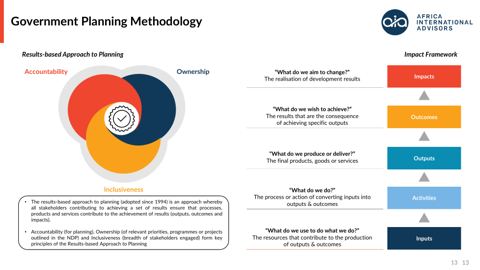
AIA's public-sector strategy methodology, aligned to South Africa's DPME Revised Framework for Strategic Plans and Annual Performance Plans, built around the results chain (inputs, activities, outputs, outcomes, impact) and an explicit problem statement, theory of change and intervention logic.
What it is
A government-planning methodology that structures a strategic plan around a results chain — inputs, activities, outputs, outcomes and impact — anchored in a clear problem statement, theory of change and intervention logic, in line with South Africa's DPME planning framework.
Problem it solves
Public sector entities need strategies that satisfy statutory planning frameworks (Strategic Plans and Annual Performance Plans) while remaining genuinely outcomes-focused rather than activity-focused.
When to use
- A national, provincial or public-entity client needs a Strategic Plan / Annual Performance Plan aligned to the DPME framework
- A results-based or logic-model structure is required to link spending to outcomes
When not to use
- The client is a private-sector entity with no statutory planning obligations (use Corporate Strategy Development instead)
Key questions
- What do we aim to change? (impact)
- What do we wish to achieve? (outcomes)
- What do we produce or deliver? (outputs)
- What do we do? (activities)
- What do we use to do what we do? (inputs)
Inputs
- Legislative and policy mandate
- Vision and mission
- Prior strategic plans and APPs
- DPME framework and sector priorities (e.g. Medium-Term Strategic Framework pillars)
Steps
- 1Problem statementDevelop a clear understanding of the problem so the plan is relevant and focused on root causes, from the perspective of intended beneficiaries.
- 2Theory of changeClarify the assumptions behind the choice of key levers of change and where the organisation should focus effort.
- 3Intervention logicDefine what must be achieved to attain a given outcome, how it will be solved and what resources are necessary.
- 4Build the results chainArticulate inputs, activities, outputs, outcomes and impact, each with indicators and targets, per the DPME framework.
- 5Performance frameworkIdentify indicators to provide a clear basis for monitoring progress and evaluating results (Accountability, Ownership, Inclusiveness).
Outputs
- Strategic Plan (5-year)
- Annual Performance Plan
- Impact/logic framework with indicators
- Theory of change document
Common mistakes
- Writing outputs when the plan should specify outcomes and impact
- Omitting the problem statement and theory of change, producing a plan that is not clearly causal
- Failing to align to the current administration's priorities/MTSF pillars
How to tailor
The results-chain terminology and DPME alignment are fixed for South African public-sector work; the specific indicators, priorities and sector value chain must be redeveloped per client mandate.
Source visuals